

If you have any departmental or Trust news you'd like to share, please get in touch.
- Details
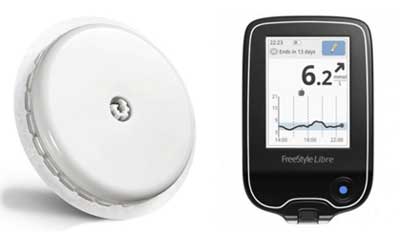 Half of NHS Type 1 diabetes patients in England are now benefiting from the use of “life-changing” flash monitors that allow them to check their glucose levels more easily and regularly, paving the way for more people to benefit. Health service chief executive Amanda Pritchard, patient groups and senior clinicians have welcomed the milestone, showing that the NHS is ahead of target to roll-out the monitors, as the independent health advisory NICE, confirmed it was beginning to consult on expanding access to the convenient and effective kit.
The most recent figures show that around 125,000, or half, of patients living with Type 1 diabetes are now using these monitors to help control their condition. The insight from the successful roll-out by NHS England has helped to inform the case for potential wider use of these technologies to benefit patients living with Type 1 diabetes, and potentially those living with Type 2 diabetes, as the health service continues to improve care for people with both forms of the condition.
The NHS Long Term Plan included a target to ensure 20% of people with Type 1 diabetes were benefiting from flash monitors by March 2021. Data for March shows the NHS significantly exceeded that goal, with the actual percentage of those benefiting hitting more than 45% – double the target, with uptake by July hitting half of eligible people. Eligible patients are currently able to access the monitors on prescription from their local GP or diabetes team, helping them to better manage their blood sugar levels. The wearable gadgets have a sensor that easily attaches to the back of the arm, allowing patients to check their glucose quickly and easily with a simple one-second scan. The monitors link to an easy-to-use app on your phone, where patients can access the data gathered by the device.
Read more: More people with diabetes set to benefit from rollout of blood sugar monitors
- Details
 Infrared light therapy could potentially be used to help people living with dementia, scientists have said. A pilot study used a helmet to beam the light into healthy volunteers' brains and found improvements in their memory, motor function and processing skills. The researchers found a significant improvement in performance in motor function (finger tapping), memory performance (mathematical processing, a type of working memory), delayed memory and brain processing speed, in healthy people who had received PBM-T compared to those in the control placebo group.
The research team, led by Dr Paul Chazot of Durham University and GP Dr Gordon Dougal, say transcranial photobiomodulation therapy (PBM-T) could benefit people with dementia. In the study, published in the journal Photobiomodulation, Photomedicine And Laser Surgery, 14 healthy people aged 45 and over received six minutes of PBM-T at a wavelength of 2068 nanometres twice a day for a month. A control group of 13 people were given a dummy helmet to use. Tests on both groups revealed a significant improvement in performance in motor function, memory and brain processing speed in those who used the real helmet compared to those who were given the placebo.
Read more: Scientists say Infrared light therapy could help people living with dementia
- Details
 Men could benefit from faster diagnosis and quicker treatment of prostate cancer following the expansion of a pioneering trial of Artificial Intelligence to analyse biopsies. Prostate cancer is the most common cancer among men. In the UK, nearly 100,000 men undergo a prostate biopsy every year - a number expected to double in the next ten years. More than 40,000 men are diagnosed with prostate cancer in England every year.
The technology, which has been developed by health tech company Ibex Medical Analytics, is designed to help reduce diagnostic errors and speed up diagnosis. Clinicians will compare the results of the AI analysis to current diagnosis methods, where biopsies are meticulously reviewed by a pathologist.
Read more: New hospitals to join pioneering study to improve prostate cancer diagnosis using AI
- Details
 The National Institute for Health and Clinical Excellence has launched a public consultation on proposed changes to the way it assesses health technology.
The consultation is open until 13 October and includes several changes which will ensure the institute (NICE) evolves alongside the technological advances being seen in medicines and data.
Several key opportunities for improvement have been identified and NICE is now seeking feedback on potential changes.
Read more: NICE launches consultation on health technology evaluation
- Details
 The NHS COVID Pass lets you share your coronavirus (COVID-19) vaccination records or test COVID-19 status in a secure way. It allows you to show others the details of your COVID-19 vaccine (or vaccines) when travelling abroad to some countries or territories. From Monday 19 July, you may be asked to demonstrate your COVID-19 status at places that use the service in England as a condition of entry to a venue or event. The NHS COVID Pass also allows individuals to demonstrate their COVID-19 status.
International travel - You can show the vaccination records contained within your NHS COVID Pass as proof of your COVID-19 status when travelling abroad. In addition to your NHS COVID Pass, you will need to follow additional rules when travelling abroad.
