PROF PAUL WHITE

Thank you very much, John. It shows, when John asks you could you send a precis of what you’ve done over the years and you ignore it, then what John will do is find whatever’s available online, so thank you for that. So, without further ado, what we’re going to be doing is talking about some work that we’ve been doing over a number of years really, which is looking at comprehensive medical equipment asset management, which is central to all of our activities, having an accurate asset base is key and what we’re going to talk about is some of the things that we’ve done at CUH over the years and how it’s developed from that and I’d like to introduce Farhang who helped us with some of this work. It’s great coming up with ideas, but when you go to the management exec and we have a very, very high profile with our management exec in terms of the finance director, medical director and I’m up there on the management bridge two or three times a week, but it’s about getting assurance, it’s that assurance model of what you want to do and what you’re proposing to do. The chief exec always says, is that right, is that correct, and what we did in this instance is worked with Farhang to get that assurance, so the complete harebrain ideas that I might come up with, is there assurance that that is right and appropriate. So, Farhang.
DR FARHANG DAEMI

Thank you very much. Can you all hear me? Great. So, if I press the green button you should see the introductions. Yeah, thank you, Paul. It’s great to be here and to give you a quick whirlwind tour of what we did with Paul and his colleagues at Cambridge a few years ago, the work that is still continuing and delivering value. So, what we’re going to do is to give you a quick introduction about our respective organisations and why as a consulting organisation and a renowned NHS Foundation Trust we are standing on the same podium really focuses on the concept of asset management in its fullest and the most comprehensive sense coming into the healthcare. So, I’m going to give you a little bit of introduction about what asset management based practices look like, how we see that manifesting itself in healthcare, which is probably the last sector of any industry to be touched by that correctly. I’m going to give you a couple of examples of some of the work that we are doing in Australia, but we’re going to then wind the clock back seven years ago to what we did with Paul and his colleagues at Cambridge and the journey that his and his colleagues have taken and moved on with over the past few years. Focus on benefits, focus on gains and focus on really doing things properly I think is the best way that is to be described.
So, a little bit about my company and why we are here. We’ve been around for about a decade or so and a few more decades behind that in terms of what we’ve been doing, there’s a myriad of technology based solutions and services ranging from digital health to commercial advice and market access that we’ve been involved with, with probably close to 50 or so clients over the past few years, but the main point about us is that we tend to bring in the full spectrum of the technology from digital health to med-tech and integrated solutions, which is more and more the flavour of the future, as John and others been mentioning before, and really bringing these three key elements together, join up the technology to the operational and clinical operational requirements particularly, as well as the commercial realities of the world. And really what does it mean to different organisations that we’ve been working with, the bit in red is what really means in terms of bringing the smart technology management across the board to deliver operational efficiencies and cost savings. Paul?
PROF PAUL WHITE
So, what is Cambridge University Hospitals? Well, as we heard this morning, maybe it isn’t as big as we think it is and looking at the work that’s been done in Manchester, but it is a reasonably sized Trust, it’s turnover’s around at circa 900 million and Addenbrooke’s is combined with the Rosie Hospital which provides the maternity and children’s services. It’s specialist to both the community, it has a tertiary referral which is national as well, especially for neuro procedures, as well as a major trauma centre, it’s got 1,100 beds with a staff of just over 11,000 and it’s operated across five divisions. The campus is getting ever and ever larger and located at the heart of the biomedical campus is some of the most leading European and also becoming worldwide biotechnology clusters and in fact AstraZeneca’s worldwide headquarters is now on the biomedical campus, which is that round building there that you see in that main slide. In my bottom left is the new Papworth building, so Papworth are now also on site on the biomedical campus and there’s more and more moves to bring quite major large businesses that have international reputation onto the biomedical campus to make it one of the most largest biotechnology centres both in Europe and also worldwide, which is great, but it’s not great when you want to get off the campus because of cars and traffic and that also has to be looked into, but there we go.
So, clinical engineering, what does clinical engineering do at CUH? Well, as we’ve just heard we operate under a 9001 and 13485 quality system. As well as actually equipment management and Trust-wide equipment management, which I provide the strategic input to, we do a lot of innovation design and development, so we take unmet clinical needs, we develop them into novel med-tech prototypes with the aim for future commercialisation, so also working with industry as well. We provide Trust-wide research governance as well as clinical measurement including gait analysis and a medical equipment library and just going back to the innovation, design and development team during COVID, we did a lot of work for the Cabinet Office looking at a lot of the ventilators coming in, but predominantly all of the ICU consumables I had to sign off on behalf of government, which was a little bit of a job, especially when it was coming in from China and elsewhere. And then also we then got roped into looking at PPE, because PPE, as you know, was a bit of a challenge at the start of the pandemic and, again, we used the same practices and procedures that we had used for the ICU consumables, looking at standards and that was really, really interesting, because it was effectively taking some of the devices which look really legitimate, looking at them and, yes, it wasn’t the CE mark, it was more a China export mark and that’s then when the certificates of conformity don’t actually line up with the notified bodies and therefore we then had all sorts of issues. So, the innovation team have done a massive amount of work during that period of time.
DR FARHANG DAEMI
OK, thanks. Paul was joking that we’re going to do a Steve Jobs.
PROF PAUL WHITE
Yeah, I was going to do a Steve Jobs, walking around with one of these. I thought it’s great.
DR FARHANG DAEMI
I’m not sure, maybe Paul Daniels and Debbie and we’ll decide who’s who, so!
PROF PAUL WHITE
Yeah, am I the Debbie McGee then!
DR FARHANG DAEMI
Don’t show any legs! So, asset management. I’m an old academic and I couldn’t help bringing a little bit of theory into this talk, but then we’re going to focus on realities of the world and I’ve taken the liberty of borrowing a slide from one of our associates, GHD Consulting, which are essentially an advice and engineering company focused on infrastructure. They do a lot of asset management and engineering services related to that for different types of industries from utilities to airports to transportation companies and what have you and the stack that make up the delivery of services to the customer is reasonably well trodden and well understood in non-healthcare, for choice of a better word, industries. You have systems and peoples coming together using a set of assets to deliver a predefined set of services to a predefined set of customers. So, an energy company, whether they’re delivering to a commercial organisation or the domestic users, they deliver electricity, gas, energy and their, if you like, landscape for as far as their customers are concerned are rather clearly defined. Healthcare is different, we all know that it’s different, but we actually have a jigsaw and more than that it’s sort of multiple levels of jigsaw in terms of who the clients are that all of us in this industry will be delivering to. Obviously everything is patient focused, is about making people better and saving lives, as has been the case for the past 18 months or so even more so than before, but you also have to address the needs and the requirements of the clinicians in the broadest sense of the word and, as you know, there are very different types of, if you like, characters and categories within the clinician community and you also have to be answerable to the commissioners and that changing in the landscape with Integrated Care Systems coming in is making things even more complicated, so really how you manage your assets and how you deliver to the entire stack of your customers is quite a challenge.
The situation is also further exacerbated by having complex site portfolios. We’ve been hearing from Joe and the others about even a Foundation Trust has multiple sites with varied levels of activities and different sets of information and databases, so you have different assets. If you just focus on, even let’s not worry about medical equipment, you look at furniture, non-medical related furniture, fixtures and fittings in a building, they sit in different asset databases and it’s quite a difficult picture to be able to really pull out the information that you need and, as we heard before, there’s a lot of overlaps, there’s a lot of misalignment and missing records and really the records’ integrity is extremely important. So, the organisational challenges are multifaceted; maintenance compliance, asset conditions, effective investment, really leading towards what is the criticality of the asset that you need at the right time at the right place in order to be able to deliver the services that you need and really that, in our view and in practice, should be driven by the clinical operational requirements and of course risk management.
So, here’s an example of the work that we are currently engaged in. Believe it or not, in the middle of the first lockdown and pandemic we won a tender in Australia of all places. We worked with our colleagues at GHD Advisory to bring about an asset criticality assessment framework and toolset for New South Wales Health Infrastructure, which essentially if you just look at just the bold text within this slide these are some of the key messages that is a criticality of the asset across the portfolio of the care settings. Health Infrastructure in New South Wales are responsible for delivering integrated care, so they have anything between, from tertiary hospitals to outreach clinics and all the shades of grey in between. This was part of a risk and compliance programme that was brought about as a result of the New South Wales Treasury Asset Management Policy, which sort of rings true to some of the work that some of the reports that we’ve been hearing from the NIO and the NOI and National Audit Office and other organisations here in the UK and really what we’re looking at is to bring all the different asset classes within one asset criticality framework starting with the medical equipment and the facilities, but not to forget the infrastructure for IT as well as digital health systems that we’ve been hearing about earlier on and all the other bits and pieces that go together in order to deliver healthcare at a setting specifically, and the last but not least category here out of these seven disciplines is clinical supplies, all the PPEs, all the consumables that are important for the business as usual, the normal delivery of healthcare as well as the surge and pandemic conditions.
So, what we are developing is a common platform that helps with a wide range of things. It’s a very tall order to be all things to all men, and women to be politically correct, but you have to really look at different parts of this rubric cube in terms of prioritisation of investment, management of the risk in terms of maintenance management as well as delivering measurable improvements in the service quality. So, the benefits are multiple, these slides will be available later on, but some of the key messages is evidence-based investment, evidence-based delivery of the services and really to support you in doing what you do much more effectively.
Let’s turn the clock back by about seven years now, which is what we started doing with Paul and his colleagues at CUH. We were invited by the board to take a look at how medical device management can be improved across the board, so we gave it a name, a Med-Tech Asset Management Initiative, we set up a nimble but effective governance around it whereby the executives and the decision makers, the directors were overseeing the programme of activities and the monitoring and assigning of the deliverables whilst we got on, in the box at the bottom, getting on with the day to day work and trying to find some measurable successes in this way.
So, within the first 12 weeks what we did is that we actually did a detailed analysis of the opportunities starting from short term gains and low-hanging fruit right up to the long term and sustainable benefits and transformations that you’ll be seeing in a minute. From the get-go in the first three to six months we managed to find some addressable savings that did not compromise the quality of service but delivered something that focuses the minds of executives and the management essentially in terms of actually delivering some operational as well as capital savings, but more importantly we started the work with Paul and clinical engineering to enable them to implement a complete end-to-end management of the med-tech equipment across the board.
There are some numbers here, but very quickly one of the short term gains was just to look at maintenance contracts, contract management for some radiology assets, some of which were not fit for purpose, some of which were missing some big elements that the level of cover needed to be increased, so it wasn’t about just dropping the level of cover or changing the supplier, it was about looking at what is critically needed and in some cases, in case of CT scanners for instance we noticed that the x-ray tubes were not included, so we actually increased the level of cover and the cost for that whilst we actually delivered some savings in the other areas. We looked at the number of capital procurement projects that were taking place and again by joining up the dots between what is clinically required and not to over-spec, not to under-spec yourself and looking at the full life cycle cost of assets, this is the full life cycle including maintenance. One of the things for instance that help in the financial management of the Trust, which is probably still true to a lot of you, is to flatten the cost of the maintenance cover going across the multiple years and what it is that you are managing to actually deliver, but more importantly the transformational journey that was started and taken over by Paul.
PROF PAUL WHITE
Thank you, Farhang. So, what the Trust basically wanted was more for less, that’s what they were trying to do, so it was about how we can integrate with that, having a higher profile element. Clinical engineering took on that challenge and working with Farhang really it was a development of, can we actually take this comprehensive asset management, so at the time it was about looking at how we can use assets more appropriately, how can we actually look at reducing costs and also how can we actually improve experience, so we looked at a number of aspects including a dedicated help desk, so we had end-to-end management of risks and issues and then also how we can then link those to substantial savings.
So, one of the first things that we looked at was what do we have on for contract management. Now, we were using an external company for contract management and there was, the review and negotiation and performance of the Trust-wide assets were held by clinical divisions and we had this, as I say, this external contractor that provided some aspects of what I would call equipment management, but really they didn’t look at the full life cycle of the asset management, they weren’t even looking at performance, so how can you therefore look at, if you’re not looking at performance how can you therefore go and renegotiate your contracts appropriately and also therefore were we getting value for money? So, what we wanted to do was look at an in-house way of providing this end-to-end management of external contracts with predefined KPIs that we could actually share with the management exec and also rationalise our OEM contracts, so not taking them from the OEM providers, but actually looking at how we can work with them by looking at multiyear contract deals, but also bringing in different types of devices by the same manufacturer under the same contracts and therefore also looking at the appropriate levels of cover.
So, that’s what we did, so we were working with the previous provider that we had around arranging multiyear contracts whilst we were going through that transition period and we took over the management of the contracts in its entirety in February 2016 and then it went so well that in May 2017 the Trust said, well, actually, tell you what, we’ll give you another 49 contracts for pathology, which we then added in. This has actually gone extremely well and as you can see in this table we’ve got 308 contracts that we’ve issued, there’s a contract value of just over seven million and since 2016 all the way through to 2019 it’s been increasing and then we had the pandemic so it’s gone down a little bit and there was all sorts of issues around that, but I think what you’ll see is that we’ve actually steadily improved and made savings around the whole contract management piece and, equally, also just by taking out our previous provider who had a flat fee for doing what they were doing and they also had a percentage of the savings that were made, even if you put in the increased clinical engineering headcount, that still was a net saving of 86K year on year in addition to the other savings that you saw in the previous slide.
So, contract management was one of them, the help desk was the other, so again in 2013/14, it sounds really straightforward now, to be fair, we’ve got a helpdesk, whoopee, but what it was around was, what is the metrics and management of what we were trying to do behind the scenes so that we can actually measure more of what we were doing, and I think what you’ll see in ‘13/’14 is that the number of devices under the management, from 21K with 7,000 items under the contract management has slowly increased and if you look at now ’19 and ’20, we’ve got 42,000 items under the management of the helpdesk, we have suppliers which has effectively been reduced to 4K, but equally also we’ve got community devices coming into the same helpdesk as well. So, we actually have basically one helpdesk for Cambridge Community Services, CPFT and CUH together and to be able to do that it was about looking at the process maps and mapping what we were doing, who contacts us, how do they contact us, what were the issues, what were the problems, and then trying to map those through in order to identify a way forward.
We started this in 2014 now, in March 2014. We put this helpdesk in place. Originally we were just running it for radiotherapy and ultrasound, it then extended to theatre service requests, then became the community helpdesk in 2015 as well and I think what we’ve been able to show is that since 2017 it’s business as usual and has helped with continual service improvement in order for customers to know where is their device, it’s coming in through the system and how it’s progressing through that and it has been much better in terms of end delivery, there are some problems which we need to resolve, but actually it’s helped and we put in a call system that we can actually log everything that’s going on. So, if you look at ’13 and ’14 there were 897 calls to the helpdesk, which is now, well, in ‘19/’20 6,710 and actually it hasn’t changed that much even over the pandemic. What I’m worried about is what we call the abandoned call, so why was the call abandoned, so was it the fact that somebody didn’t answer it, because the way the system works it pushes the calls all around the place so that there will be somebody who can actually answer it and that’s something that we’re looking into, so what was the reason why the calls were abandoned and does that actually impact on the service quality and the service provision that we’re providing.
One of the challenges that we have seen, both nationally and regionally and also in Trust, is around the whole thing around asset tracking and, I can’t even remember the year, was it 2011 I think it was-
DR FARHANG DAEMI
2011, yeah.
PROF PAUL WHITE
-we put in the equipment library at CUH, which is no big deal, but then effectively we asset track all of our devices, so we have 57,000 devices with passive RFID tags, 4,500 with dynamic RFID tags. So, why did we do that? Well, what we were finding was that clinical staff were spending quite a lot of time, 30% of their time actually looking for devices. They were walking round the Trust, which is getting ever larger, to find them. Clinical engineers weren’t able to find devices for PPM, nursing staff had this difficulty in finding them and also what I wanted to know was what was our utilisation like in terms of utilisation of devices and did we have too many devices, could we reduce the capital programme in any sort of way and therefore reduce the capital expenditure. So, I think most people will know about this in terms of RFID, we can locate the devices reasonably quickly and easily, therefore improves patient care, improves efficiency especially around maintenance and compliance, it also allows us a better utilisation, avoiding the need to purchase new equipment, especially also using it with the equipment library and also increasing the confidence in the supply of equipment amongst clinical staff as well and the reason I’m sort of raising this is that I think the pandemic has raised this to a bigger level and we’ll come back to that in a minute.
So, just to put some figures to it, in 2011 we opened the library with 1,500 items tagged, today it’s 4,500. We also then tagged beds and mattresses because we were struggling to find out where they were in the organisation, but then equally also we’re using the same technology to tag surgical sets, so where are they in terms of cleaning, where are they in terms of actually putting them together and packaging them and where are they in terms of the operating room and that has actually worked extremely well. So, asset utilisation has been extremely important and has enabled us through our medical device integration to know exactly where they are and really just as a plug, some of the latest solutions on asset tracking and utilisation are being demonstrated in the expo exhibition hall outside, so I’d suggest it’d be quite good to look at them if you haven’t got one.
So, COVID, that was that thing and still is the thing that was going on. I think clinical engineering has raised its profile and we’ve heard that all the way throughout the conference. It’s been identified as a group who’s central to the response for COVID to meet the super surge capacities in Trusts, but also as we heard with Ruth and the MTS team and Barts through the Nightingale Hospitals and what that has shown is issues in processes, issues in procedures. At the start of the pandemic there was a lack of understanding, both regionally and nationally, of what equipment was available in Trusts. Did we have the capacity of 4,000 ventilated patients? If we were to get to a national ventilatory capacity of 8,000, did we have that available? We didn’t know and that’s the reason why the Medical Devices Directorate has been put together in NHSE&I, headed by Dr Chris Stirling, and he was one of the guys that we were working with through the Cabinet Office with the ICU consumables and working with the MoD on a daily basis with daily calls with them and I think what we’re going to be doing is actually taking and putting a spec together through the National Clinical Engineering Network, working with Chris to identify what is the need for the future, how can we take individual Trust asset registers, linking them into a regional one and then plugging it into nationally, not only so that government actually knows what devices are available, where they are, what their condition is like, but equally also that allows us to start using standardised practices and GMDN, so we can actually standardise what we classify as a device and record it in the asset register in exactly the same way and that’s not what we’ve done. Everybody defines an asset in a different way and therefore when we then come to look at KPIs and comparing services we can’t do that. The old ERIC report I filled out in my first ever year at CUH in 2005, it was complete rubbish, it was looking at apples to pears, I didn’t bother filling it in any further year because there was no point. That’s the reason why we are the cheapest hospital if you look at it, because I don’t put the figures in. I don’t know who makes it up, but it’s complete rubbish and this is the reason why we have to make sure we define an asset in exactly the same way so that we can actually compare what we’re actually doing and equally also feeding into government so they actually know what we have. So, therefore, as I say, we’re going to be working with Chris. And then there was the national ventilator challenge. Well, that was a bit of a disaster. It was an element of let’s take companies who’ve never, ever made them.
So, the one at the top actually is our good hoover manufacturer, so this is Dyson’s element of putting together ventilators and it was great, it was good, but it wasn’t the appropriate response at the right time. What we should have done is actually find disclosure agreements and got manufacturers to make devices and components for those ventilators that we already had, rather than coming up with new ventilators that would actually take umpteen years to get them to regulatory approval. Only one is currently actually in use, which is the UCL-Ventura device. Well, there’s 5,000 in an MoD store because it uses 120 litres per minute, exactly when we don’t have enough oxygen supply to be able to supply them. So, when these decisions are being made, it’s really, really important that clinical engineering and clinical engineers are actually involved in these discussions and, as Helen said in her talk, it’s about raising the profile of clinical engineering.
So, we’ve seen a lot of this, so really this is the importance of asset management, knowing what we have, where we have it and at what time and I think the Nightingales, as we heard from Ruth, with the Barts team under Barts’ governance process was exactly the right thing to do and bringing in healthcare scientists and others integral to the team setting up the functions of the Nightingale and what we’ve seen really is that at national times of need is when we actually need to have systems in place to help us actually take some of these forward. And whilst this sort of says it’s the overview of the Nightingale, which it is, I think a lot of us actually use similar processes, looking at healthcare science volunteers, so these are healthcare scientists in different disciplines, clinical engineering is not their main element, but actually they were extremely useful and very, very helpful in terms of taking forward the elements both within Trusts and within the Nightingale Hospitals. Also working with non-NHS volunteers through the Royal Academy of Engineering and they also helped both the Nightingale Hospitals and locally as well.
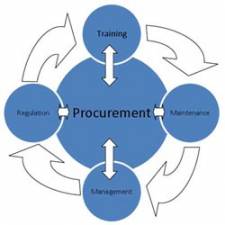
So, what are the conclusions and the lessons learnt? I think full cycle asset management delivers short and long term benefits and savings, it’s transformational through collaboration and partnerships, it’s only possible through a combination of technical, commercial and operational skills, there are immediate gains delivered, as we’ve seen, to the values of a million pounds, which is 100K recurring, and also in terms of long contract management delivered, it’s delivered £1.8 million worth of savings to date and also the clinical engineering helpdesk I think has actually helped with the 57,000 items under central management and all the objectives were actually achieved. And I think, hopefully you’ll agree with seeing what we’ve delivered today, I think significant operational efficiencies and savings can be gained through development of joined up strategies to drive effective planning, smart procurement, expedient deployment, responsive management, and the timely replacement of medical technology assets.
Thank you very much.
Dr. Farhang Daemi and Prof. Paul White's presentation at the EBME Expo Full Life-Cycle Med Tech Asset Management Delivering Major Savings and Efficiencies