

If you have any departmental or Trust news you'd like to share, please get in touch.
- Details

Improving Outcomes on the General Ward with Patient SafetyNetTM
- Remote Monitoring and Clinician Notification System
In a landmark study published in Anesthesiology in 2010, researchers found that continuously monitoring adult patients on a post-surgical floor at Dartmouth-Hitchcock Medical Center using Patient SafetyNet with Masimo bedside devices resulted in a 65% reduction of rapid response team activations and a 48% reduction in transfers back to the ICU. Following the initial implementation and positive results in one post-surgical ward, Patient SafetyNet with Masimo bedside devices was expanded to cover more than 200 inpatient beds in all medical and surgical units.
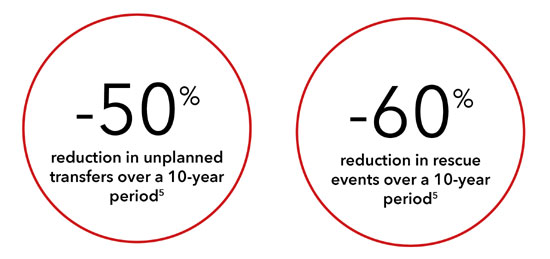
In subsequent articles published in the Anesthesia Patient Safety Foundation Newsletter in 2012 and The Joint Commission Journal on Quality and Patient Safety in 2016, researchers reported that Patient SafetyNet enabled the facility, over a five-year period, to achieve their goal of zero preventable deaths or brain damage due to opioids, and over a ten-year period, maintain a 50% reduction in unplanned transfers and 60% reduction in rescue events, despite increases in patient acuity and occupancy.
Learn more>> https://www.masimo.co.uk/products/hospital-automation/surveillance/safetynet/
@MasimoInnovates || #Masimo
- Details
Masimo (NASDAQ: MASI) today announced the results of a recently published ten-year retrospective study in which researchers at Dartmouth-Hitchcock Medical Center investigated the impact of an integrated clinical surveillance monitoring system, using Masimo SET® and Patient SafetyNet™ technologies, on mortality related to the use of prescribed opioids in the general ward. Over the ten years studied, of 111,488 patients in units with surveillance available, there were zero patient deaths and no patients were harmed by opioid-induced respiratory depression while continuous monitoring was in use. In contrast, among patients in units without surveillance available, there were three deaths.1

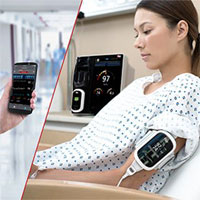
Masimo Patient SafetyNet™ with Root®, Radius-7®, and Replica™
The surveillance monitoring system provided continuous monitoring using Masimo SET® Measure-through Motion and Low Perfusion™ pulse oximetry, and was comprised of Masimo Radical-7® and Rad-87® Pulse CO-Oximeters®, Root® Patient Monitoring and Connectivity Hubs, and Masimo Patient SafetyNet™, which provided supplemental remote monitoring at central view stations and alarm and alarm escalation notifications to clinicians' pagers. Monitored parameters included oxygen saturation (SpO2) and pulse rate (PR). The researchers reviewed ten years of data collected from 2007 to 2017, over which time there were 126,697 general care unit discharges.
Dr. Sue McGrath and colleagues at Dartmouth-Hitchcock Medical Center found that, over the 10 years, of the 111,488 patients in units with surveillance monitoring available, "none died or were harmed by opioid-induced respiratory depression when surveillance monitoring was in use." Of the 15,209 patients in unmonitored units, three patients died from opioid overdose. The reduced death rate when surveillance was available, compared to when it was not available, was statistically "significant" (p=0.03).
A fourth patient died in a unit where surveillance monitoring was available but Masimo technology was not being used at the time of the adverse event. The researchers noted, "The fact that one patient with known risk for opioid sensitivity died while in a unit where monitoring was available but not in use highlights the importance of system adoption and adherence to standards of care."
The researchers concluded, "For a 10-year period, the rescue system with continuous surveillance monitoring had a profound effect on death from sedative/analgesic administration in the general care setting. This approach to patient safety can help address the risk of sedative/analgesic-related respiratory arrests in hospitals."
Regarding the cost of deploying such a system, the researchers noted, "Although cost is often raised as a barrier to implementation, a previously performed financial analysis demonstrated cost-effectiveness of surveillance monitoring due primarily to intensive care unit patient days avoided when early detection of patient deterioration occurs."
They continued, "This study confirms that surveillance monitoring for pharmacologically induced respiratory arrest in hospitalized patients can virtually eliminate deaths due to this serious but treatable complication. In other high-risk, safety-focused industries, the level of evidence that currently exists for continuous surveillance monitoring to mitigate the risk of accidental sedative/analgesic overdose would likely prompt immediate calls for widespread implementation of safety interventions."
Joe Kiani, Founder and CEO of Masimo, commented, "We are incredibly grateful to Dr. McGrath, her colleagues, and everyone at Dartmouth-Hitchcock Medical Center for demonstrating the value of continuous monitoring of post-surgical patients over a ten-year period. Hundreds of other hospitals have adopted our technology and have reported similar results. We hope that this new study will inspire every other institution to implement Masimo SET® on their general floor to eliminate preventable deaths due to opioid overdose, especially at this time when illnesses that impact the respiratory system, such as COVID-19, are so prevalent."
In previously published studies at Dartmouth-Hitchcock Medical Center, researchers found that after deploying the continuous monitoring system in the original 36-bed unit, there was a 65% reduction in rapid response team activations and a 48% reduction in transfers back to the ICU.2 After five years of use, they reported zero preventable deaths or brain damage due to opioids, as well as cost savings of $7 million, 3 and after ten years, they reported maintaining a 50% reduction in unplanned transfers and a 60% reduction in rescue events, despite increases in patient acuity and occupancy.4
https://www.masimo.co.uk/products/hospital-automation/surveillance/safetynet/

@MasimoInnovates || #Masimo
References
1. McGrath S, McGovern K, Perreard I, Huang V, Moss L, Blike G. Inpatient Respiratory Arrest Associated with Sedative and Analgesic Medications: Impact of Continuous Monitoring on Patient Mortality and Severe Morbidity. J Patient Saf. 14 March 2020. DOI: 10.1097/PTS.0000000000000696.
2. Taenzer AH et al. Impact of pulse oximetry surveillance on rescue events and intensive care unit transfers: a before-and-after concurrence study. Anesthesiology. 2010:112(2):282-287.
3. Taenzer A et al. Postoperative Monitoring – The Dartmouth Experience. Anesthesia Patient Safety Foundation Newsletter. Spring-Summer 2012.
4. McGrath SP et al. Surveillance Monitoring Management for General Care Units: Strategy, Design, and Implementation. The Joint Commission Journal on Quality and Patient Safety. 2016 Jul;42(7):293-302.
5. Published clinical studies on pulse oximetry and the benefits of Masimo SET® can be found on our website at https://www.masimo.com. Comparative studies include independent and objective studies which are comprised of abstracts presented at scientific meetings and peer-reviewed journal articles.
6. Castillo A et al. Prevention of Retinopathy of Prematurity in Preterm Infants through Changes in Clinical Practice and SpO2 Technology. Acta Paediatr. 2011 Feb;100(2):188-92.
7. de-Wahl Granelli A et al. Impact of pulse oximetry screening on the detection of duct dependent congenital heart disease: a Swedish prospective screening study in 39,821 newborns. BMJ. 2009;Jan 8;338.
8. Estimate: Masimo data on file.
9. http://health.usnews.com/health-care/best-hospitals/articles/best-hospitals-honor-roll-and-overview
- Details


Lab balance and patient scale calibration and repair from one supplier
The calibration test of medical scales is time-consuming. We offer you perfectly synchronised services to ease your workload and save you time.
Your benefits
- Independent search for all scales
- Complete co-ordination of equipment inventory
- Professionally trained and DBS checked service
- Engineers with MIA identification cards
- Five-point calibration test offered as a minimum
- Infection control measures undertaken
- We only use calibrated and traceable weights in accordance with 2014/31/EU
- You will receive a calibration test certificate, as well as a service report via our secure online portal
Repair and reverification service: Just call us and we take care of it immediately, meaning there will be minimal disruption to your procedures. Our service engineers always work in accordance with the Medical Devices and Weighing Regulations and we’re accredited to self-re-verify by the National Measurement Office.
Get 8 years of warranty for your seca scales: a seca service agreement grants you 8 years of warranty for all class III scales and measuring stations in our premium wireless range, when purchased directly, meaning no repair costs for up to 8 years! In case of a warranty claim, we either repair, re-calibrate, re-verify or replace your product and send the device back to you.
We take care of your lab balances

We are now UKAS accredited!
Now you can cover your lab balance calibration with our service as well. Our UKAS ISO 17025 certified calibration service, complies with ISO 15189 balance calibration for NHS accredited labs.
You can now reduce administrative work and save time by using service from one supplier. seca are an ISO/IEC 17025:2017 compliant lab balance calibration company. We can offer onsite UKAS calibration certification includes UoM, Linearity, Repeatability, Eccentricity. As found and post adjustment calibration offered where required and only UKAS calibrated and traceable F1 and E2 class weights are used.
By centralising two contracts under one umbrella we can help manage your inventories, annual testing, certification and save you valuable time. Contact us today for a quote and further information.
seca UKAS accreditation number: 10843
seca United Kingdom
40 Barn Street Birmingham B5 5QB
0121 643 9349
This email address is being protected from spambots. You need JavaScript enabled to view it.
seca.com/support
- Details


Automate Patient Management Across the Continuum of Care
> Displays near real-time information from any connected Masimo device at a central station
> Allows for alarms and alerts from bedside devices to be sent directly to clinicians
> Simplifies workflows with ADT integration
> Automates data transfer from connected devices directly to EMRs
For more information, visit www.masimo.co.uk/safetynet*
The use of the trademark Patient SafetyNet is under license from University Health System Consortium
For professional use. See instructions for use for full prescribing information,including indications, contraindications, warnings, and precautions.
© 2020Masimo. All rights reserved.
- Details

NORTH East manufacturing firm Seaward is part of the national effort to keep Covid-19 patients and NHS staff safe.
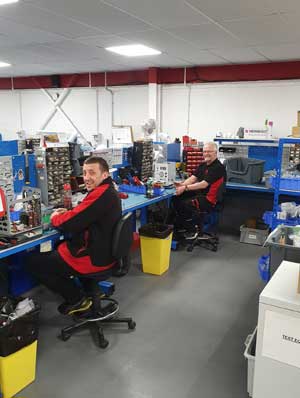 The firm is supplying vital electrical safety testing equipment to the new Nightingale Hospitals and existing hospitals across the UK, as well as internationally.
Seaward builds electrical safety testing equipment for everything from ventilators to hospital beds, hoists and pumps via its medical arm. Rigel Medical.
Andrew Upton MD of Seaward, said: “A limited workforce is keeping the Peterlee-based factory up and running. The greatest call at the moment is for the electrical safety checking of ventilators.
“Because a lot of the equipment is either brand new or older and being brought back into use, it is vital it is safety tested to protect patients and staff.
“We are supplying to the UK and the rest of the world and our team is working flat out to cope with demand. We see it as our way of being able to say ‘thank you’ to the NHS.
“We have been working on behalf of the Cabinet Office commissioners to supply products to Nightingale Hospitals and through firms such as Mercedes, Ford. Rolls-Royce, Dyson and McLaren who are also part of the effort.
“Although it has been hectic, and we have been producing and selling five times as much of this type of equipment, we have had to abandon everything else for the time being to concentrate of what is so urgently needed.
“Our employees are more than happy to work. They understand the immediate need for this equipment, and that we have put in place the best possible measures to protect them as well, observing social distancing, the introduction of a one-way system and converting the conference room to a canteen extension so breaks can be staggered to minimise contact.
“They actually think it is great that they can play their part in supporting the NHS in some way during this national crisis and are proud to be among those people who have stepped up to help.
“Our equipment is also being exported to help many international communities who are also suffering greatly due to Coronavirus both in Europe and China.
