

If you have any departmental or Trust news you'd like to share, please get in touch.
- Details
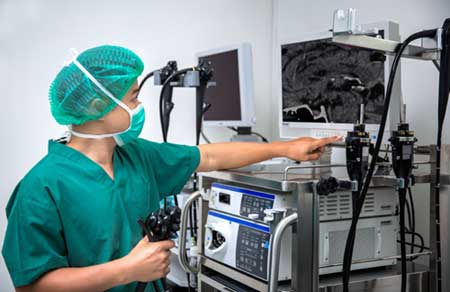
An unusually high demand for endoscopes, damaged endoscopes or devices undergoing repair can all result in an endoscopy department operating sub-optimally, potentially developing waiting lists. However, purchasing equipment to resolve these ‘bottle necks’ can be prohibitively expensive and often only a short time frame needs to be bridged.
Avensys’ endoscopy rental service is available short or long term and represents the ideal way to increase departmental capacity, and we can have rented equipment delivered to you within 48 hours of request.
We stock flexible endoscopes and stack systems covering all manufacturers and modalities including Olympus, Pentax and Fujinon.
Endoscopes in stock and available include gastroscopes, colonoscopes, bronchoscopes, duodenoscopes and cystoscopes. Stack systems are available as complete systems or as separate components (light source, image management system, screen etc).
Prices vary depending on manufacturer, modality, numbers required and time frame. Contact us for a pricing enquiry or more information:
Tel : 01562 745 848
Email : This email address is being protected from spambots. You need JavaScript enabled to view it.
- Details

 Investment in biomedical device test equipment calibration services is delivering benefits for an East Midlands NHS hospital trust.
The University Hospitals of Leicester NHS Trust, founded in 2000, is one of the six largest NHS trusts in England with over 12,000 staff who treat in excess of one million patients per annum across three sites: Leicester Royal Infirmary, Glendale Hospital and Leicester General Hospital.
The organisation has used the expertise of Calibrationhouse for more than 10 years to undertake the calibration of hundreds of items of specialist medical electrical test equipment. These include Rigel Medical and Fluke Biomedical manufactured defibrillation analysers, patient simulators and ventilator testers as part of a well-established programme of calibration of a wide range of test equipment.
The service, which features access to a team of skilled engineers operating from a fleet of technical vehicles, sees the provision of specialist UKAS calibration services deployed onsite at the Leicester hospitals, supported by state-of-the-art laboratory facilities in County Durham.
As part of an ongoing contract, engineers have recently completed the calibration of 170 units on site at the three hospitals in under five days. This work provides the NHS Trust with significant equipment service and maintenance cost savings on the back of a high-quality industry standard compliant service.
Many medical device testers such as those used on defibrillators, ECGs, blood pressure monitors and electrical circuits are tested on site. Additionally, dozens of items used to check infusion pumps, ventilators and anaesthetic machines, which are unable to be calibrated onsite, are sent to Calibrationhouse’s laboratory at Peterlee. They all undergo extensive checks during calibration checking by engineers and are quickly returned to service.
The move ensures the University Hospitals of Leicester NHS Trust is compliant with MHRA (the Medicines and Healthcare products Regulatory Agency) regulations for medical device test equipment, and ISO17025:2017, which covers general requirements for the competence of testing and calibration laboratories.
The Trust’s medical physics technician and calibration lead Ian Collier, whose responsibilities include overseeing annual equipment inspections, testing and calibration, said Calibrationhouse is one of the fastest, most comprehensive, and cost-effective precision instrumentation services available in the UK.
He added: “The ability to carry out onsite calibration is really beneficial to our activities and the wider NHS Trust, meeting the requirements of a busy hospital environment, where resources and equipment must be readily available and performing to optimum levels at all times.
“Indeed, over many years the service has continued to meet and exceed our needs, saving us a small fortune in service and maintenance costs. Moreover, it allows me to spend less time on managing calibration procedures and more time on other areas of operations.
“Calibrationhouse’s service is really good. It’s reliable and flexible enough to accommodate a vast array of demand and tester types while allowing us to send any number of testers at one time to its County Durham lab. It’s also flexible enough to accommodate any unscheduled or unforeseen changes in the type of instruments that they are expecting to calibrate.”
The University Hospitals of Leicester is one of many of the UK’s NHS Trusts to benefit from access to Calibrationhouse’s expertise and a broad range of test, measurement and analysis equipment. The company has a track record of working with leading test instrumentation brands who include Fluke, Seaward, Megger, Keysight, Agilent, and specialist electromedical equipment suppliers such as Rigel, Fluke Biomedical, B.C Group, Pronk Technologies and others.
Calibrationhouse is accredited to ISO9001:2015 and ISO17025:2017‚ with service, calibration and repairs of all types of electronic equipment being undertaken with assured traceability to national standards.
More at www.calibrationhouse.com
- Details


 Leading medical device manufacturer, Mindray, will be helping clinicians enhance quality of care with their cutting-edge range of anaesthesia, ultrasound and patient monitoring solutions at the Anaesthesia and Critical Care 2022 (ACC 2022) Exhibition this November.
Mindray will have a suite of ultrasound and anaesthesia machines on stand I:32. In-house experts will be on hand to discuss how the solutions and integrated patient monitoring can improve workflow efficiency and patient outcomes with clinicians.
Further efficiencies can be explored with Mindray’s M-Connect, a universal monitoring platform which enables data sharing between medical devices and third-party electronic patient records (EPR) for uninterrupted visibility of patient data and scalable integration.
To demonstrate the latest advancement in needle guidance, Mindray will run three hands-on training workshops on 16 November for delegates to test the smart tools on the TEX 20 and TE9 ultrasound machines.
The smart tools are improving exam efficiency and first-time target success rates with the eSpacial Navi™ which includes 4D magnetic needle navigation technology and needle-tip trajectory foresight.
The workshops will cover how to:
- Easily use the smart tool, including set-up, performance, and interpretation.
- Deliver enhanced needle visualisation and real-time location during in-plane or out-of-plane procedures using the smart tool eSpatial Navi™
- Increase accuracy and initial operation success rate through precise image capabilities, using 4D magnetic needle navigation technology
- Recognise when the course of the needle is beginning to stray from the intended map and rectify this before the need to re-puncture.
- Increase clinical confidence and first pass success rate, with the needle trajectory and required depth map, for maximum patient safety
The new A9 anaesthesia workstation will be on display on stand I:32 which features industry-leading intelligent tools to automate and reduce clinical interventions while maintaining patient safety processes.
The A9 offers ICU-level ventilation for all patients and can automatically adjust fresh gas and output from its electronic vaporiser to achieve target end-tidal agent and oxygen concentration levels.
The workshops will take place on 16 November at 09.30-10.15, 10.30-11.15, and 11.30 – 12.15.
To find out more about Mindray’s ultrasound and anaesthesia solutions, find them on stand I:32 at ACC 2022, or visit: https://www.mindrayuk.com/
- Details
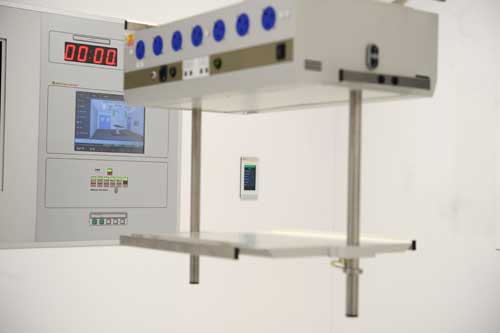
Medical IT systems provide operating theatres, intensive care units and other Group 2 medical locations with a safe and secure power supply that continues to operate in the event of a first insulation fault.
The new Bender COMTRAXX® CP305 alarm indicator and control panel is designed to display the status of the medical IT system and notify the clinical and maintenance teams of any faults in a safe and timely manner.
 The CP305 is part of the CP series of control and alarm panels, that has a modern 5" glass touch display, an intuitive interface for improved usability, and increased display area that ensures the status of the medical IT power is recorded instantaneously. Faults are signalled through audio and visual alarms, with customised text messages such as: Fault on socket-outlet 3 in room 508, remove connected device. This gives clinical staff information where a fault has occurred and how to eliminate it. Clear messaging and handling instructions prevent uncertainties during troubleshooting.
CP305 offers all prerequisites for future-proofing hospitals and can be controlled, parameterised, updated and maintained remotely without the need for an engineer or maintenance teams to enter sensitive hospital areas. Connection is made via LAN or through the Bender Connect App. CP305 can also connect to nurse stations to monitor the status of systems through a central location.
CP305 is a successor to the MK2430, which widespread in its use and has reliably displayed faults in hospital power systems for many years. As a direct replacement it is modern, easy to retrofit and install, and due to its glass surface, it is easy to clean and disinfect. It is part of the COMTRAXX® range of control panels including CP9 24” operating theatre alarm indicator panel and CP9 15” suitable for staff bases and nurse stations, and will be recommended as standard for new build hospital projects. CP305 will be available Q3/2022.
- Details

The healthcare community is beginning to understand the opportunities that remote monitoring will unlock for patient care, says Prof Afzal Chaudhry, director of digital, CIO and CCIO at Cambridge University Hospitals Foundation Trust.
Cambridge University Hospitals Foundation Trust (CUH) has implemented a fully integrated patient surveillance infrastructure based on Masimo’s Patient SafetyNetTM supplemental remote monitoring and clinician notification system and Halo ION™, which provides clinicians with a comprehensive, personalised and continuous patient score.
Masimo’s Root® device allow them to create a centralised patient monitoring and connectivity hub, while a variety of sensor types monitor patients’ vital signs, delivering enhanced, clear local displays to carers at the patient’s bedside, and remote monitoring capability to clinicians on mobile devices.
This degree of interoperability means the trust can extend the range of clinical input and advice into an individual patient’s care thanks to a continuous flow of contextualised and meaningful data.
Ticking all the boxes
“It’s all about flexibility, accuracy, timeliness and being more patient-centric,” says Chaudhry. “Whenever I think of all the properties of high-quality patient care, remote monitoring and the patient empowerment that comes with it absolutely ticks the boxes across the board.
“From a clinician’s perspective, a more regular flow of continuous data rather than intermittent spotting at traditional touchpoints gives you a more accurate understanding of what is ‘normal’ for that patient. So, you are better placed to use decision support tools and early warning algorithms to detect at an earlier stage and in a more personalised way when a patient’s condition is deteriorating – or even when it’s improving, and you can withdraw some treatment.”
Prof Chaudhry says the data-capturing monitoring devices enable more meaningful and appropriate use of hospital resources to support those patients who need it in a more flexible manner than in the past, when care pathways were more rigid and tended to be based around calendar appointments.
For the patient, continuous monitoring combined with remote review means they can get to a position where they get on with their life while being supported by the hospital in managing their illness.
Certainly, the challenges of medical device integration (MDI) remain. But Chaudhry says the focus on interoperability by technologies like Masimo’s means there is a straightforward methodology that enables data to be brought seamlessly into the medical record, even acting as a bridge to older devices that historically have not been so straightforward to connect.
Enter the virtual ward
Remote monitoring also brings the opportunities of the virtual ward a step closer, with obvious benefits in terms of improved efficiency and the allocation of hospital resources to those patients who need it. Chaudhry says that with proper governance, the virtual ward can be an ideal halfway house between being in hospital and being discharged.
“For example, if you can do a virtual ward related to children, their parents might have the opportunity to continue to work while the healthcare community provides support that allows the child to go to school wearing an unobtrusive monitor,” he says.
“The notion of a virtual ward, being able to send a patient home a bit earlier but with the tools and devices for the hospital to be sure of their safety, is becoming a reality. Patients often do better at home. They sleep, eat and rest better. And that frees hospital capacity while safeguarding the patient through that transition.
“I’m convinced that in the near future, people will come up with novel ways of using the data and approaches enabled by remote monitoring that will allow people to control their conditions rather than having those illnesses control them – and for clinicians to provide patients with an uplifted level of support that they wouldn’t otherwise be able to do.”
